
What Is a Radome, and Why Does It Matter?
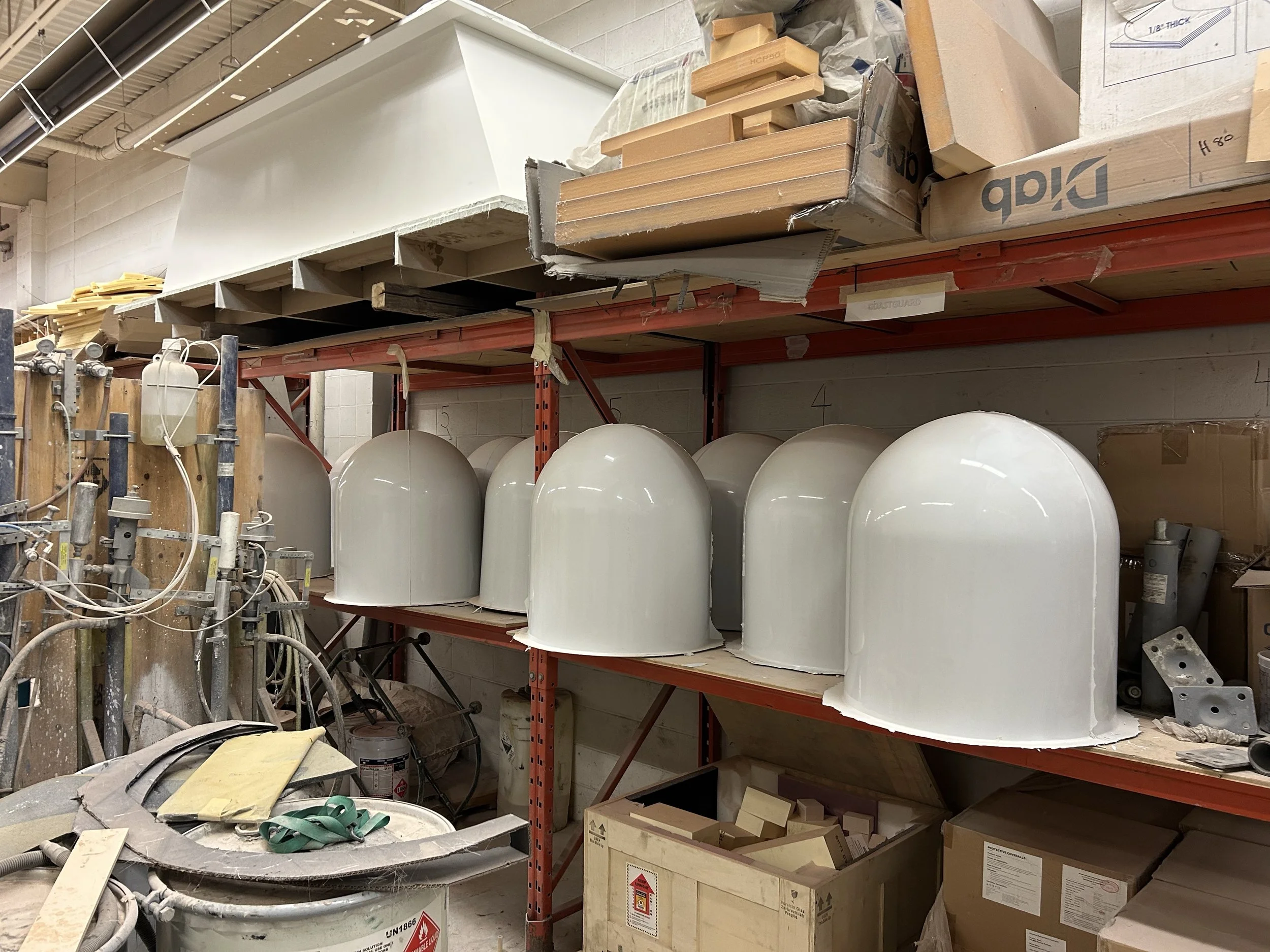
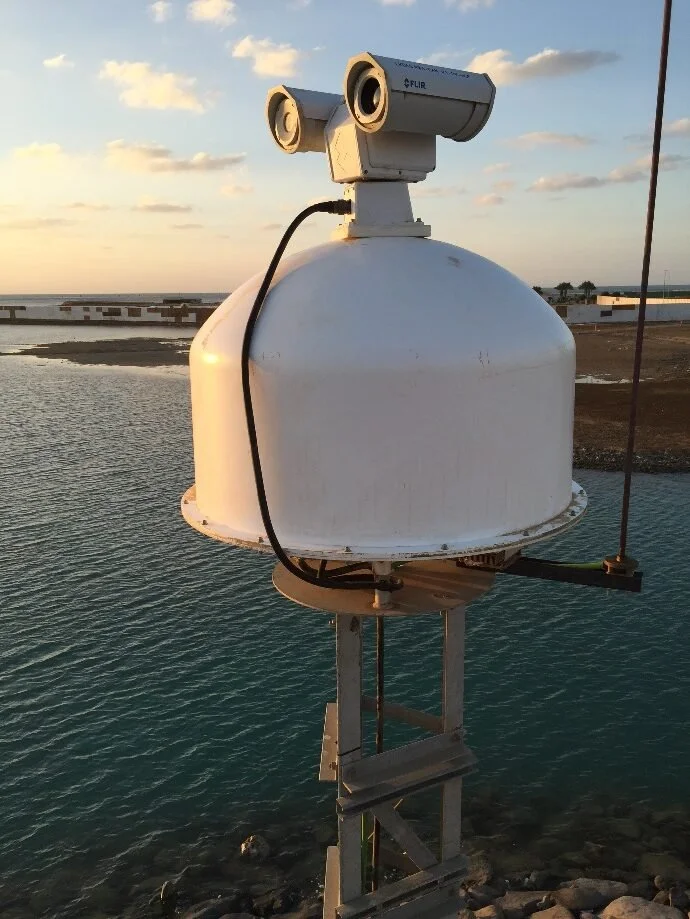
Antenna systems are precision instruments. They are engineered to transmit and receive signals across specific frequency bands, often in demanding environments where exposure to rain, ice, wind, and salt air would degrade performance or cause physical failure. A radome solves that problem. It is the protective enclosure that sits around an antenna, and when it is designed correctly, neither the antenna nor the operator has to think about it.
The word itself is a contraction of “radar dome,” a term that dates to early military radar development. Today, radomes appear across a much broader range of applications, from satellite ground stations and weather monitoring equipment to counter-drone systems and national security infrastructure. The form and size vary widely. What stays constant is the core engineering challenge: protect the antenna without compromising what it does.
The RF transparency challenge
The reason radome design is genuinely difficult comes down to RF transparency. Every material that a radio frequency signal passes through will affect it to some degree. The goal is to engineer an enclosure that the antenna’s operating frequencies pass through as though the radome were not there at all.
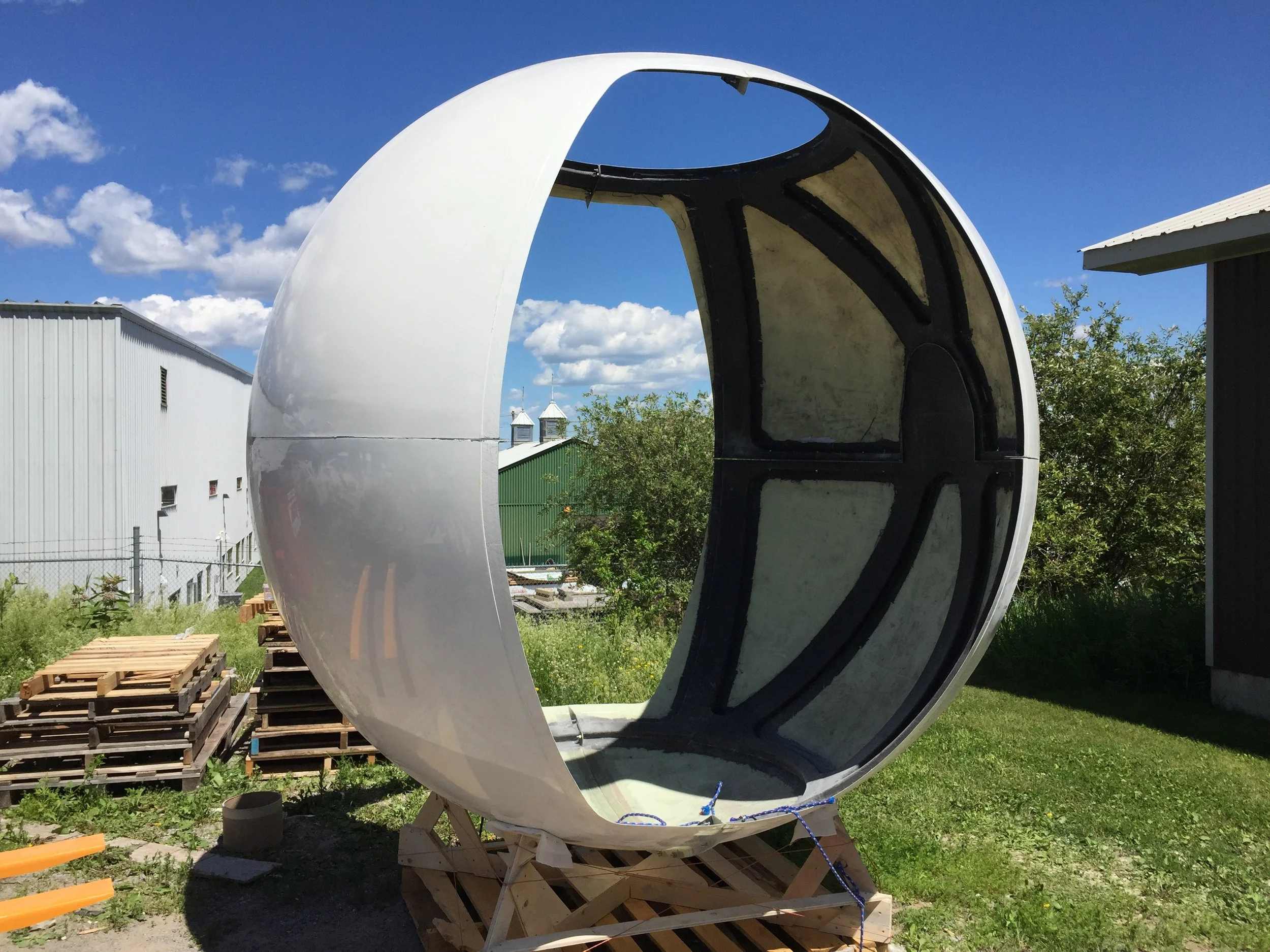
That is harder than it sounds. The relationship between a radome’s structural material, its thickness, and the frequency bands it must pass is not linear. Each antenna system has a specific set of requirements, and the laminate schedule — the layered construction of the composite wall — has to be engineered around them. An off-the-shelf enclosure that performs well at one frequency band may introduce insertion loss, signal reflection, or pattern distortion at another.
At CCI, we use proprietary software to determine the optimal laminate schedule for each antenna and frequency combination we work with. It is the step that separates a radome that performs from one that merely fits.
What radomes protect against
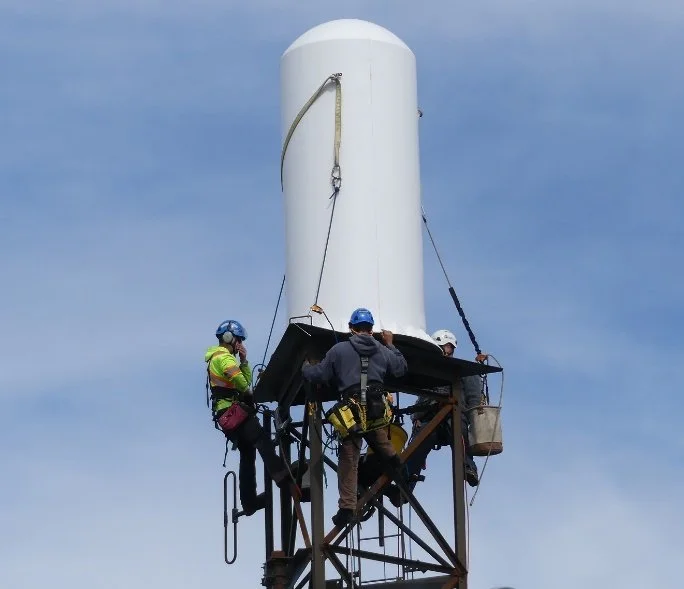
Environmental loading is the other half of the design equation. Radomes are typically installed in exposed locations where antenna positioning and line-of-sight requirements demand them: rooftops, hilltops, remote sites, marine vessels, and forward-operating locations. Those environments impose significant physical demands.
Common environmental loads radomes are engineered to handle
Wind loading, including sustained high winds and gusting in exposed locations
Ice accumulation and freeze-thaw cycling across temperature extremes
UV degradation and long-term weathering in outdoor installations
Salt fog and humidity in coastal and marine environments
Sand and particulate abrasion in arid or high-wind conditions
Advanced composite materials, particularly fibreglass and specialized laminates, are well suited to these demands. They are structurally strong, lightweight relative to metals, and do not interfere with RF signals the way conductive materials would. Composite radomes also maintain dimensional stability across temperature swings, which matters for antennas where pointing accuracy is critical.
Where radomes are used
The range of applications reflects how broadly antenna systems are deployed. In the defence sector, radomes protect radar, communications, and sensor systems on fixed installations, mobile platforms, and remote sites. In satellite communications, they allow ground station equipment to operate year-round regardless of weather conditions. Counter-drone and security systems often operate in austere or temporary environments where a durable, deployable enclosure is essential from day one.
CCI’s current programs span several of these verticals. We have supplied radomes supporting an Australian counter-drone security organization, installed a rooftop radome at the United States Naval Observatory in Washington, DC, and are actively engaged with defence and government clients across Canada and internationally.
Why the supplier matters
A radome that underperforms rarely fails in an obvious way. Signal degradation can be subtle, and tracing it back to the enclosure takes time and testing. That makes the engineering behind the product, and the experience of the team building it, more consequential than it might first appear.
For procurement teams and systems integrators, the questions worth asking are straightforward: Is the laminate schedule optimized for this specific antenna and frequency? Has the design been validated against the environmental loads of the intended installation? Does the supplier have demonstrated experience in the application vertical you are working in?
Those are the questions CCI is built to answer. Our radome work is grounded in composite engineering expertise developed over decades of manufacturing for defence and commercial clients, and every enclosure we produce is designed to the requirements of the specific program it serves.
Over the coming months, we will be publishing a series of posts that go deeper into radome design, application verticals, and the technical considerations that matter most to buyers and integrators. This post is the starting point.
Have a radome requirement you want to discuss?
We work with defence primes, systems integrators, and government clients across Canada and internationally.
