
Why Laminate Schedule Is the Most Important Decision in Radome Design
A radome has one job: protect the antenna without getting in its way. The structural side of that equation — keeping out weather, handling wind loads, surviving the installation environment — is well-understood engineering. The RF side is harder. And the place where radome performance is won or lost is in the laminate schedule.
The laminate schedule is the layered construction of the radome wall. It defines what materials are used, in what order, and at what thickness. Get it right and the signal passes through cleanly. Get it wrong and you introduce insertion loss, signal reflection, or pattern distortion — problems that are easy to miss during procurement and expensive to diagnose once a system is installed.
Why there is no universal laminate
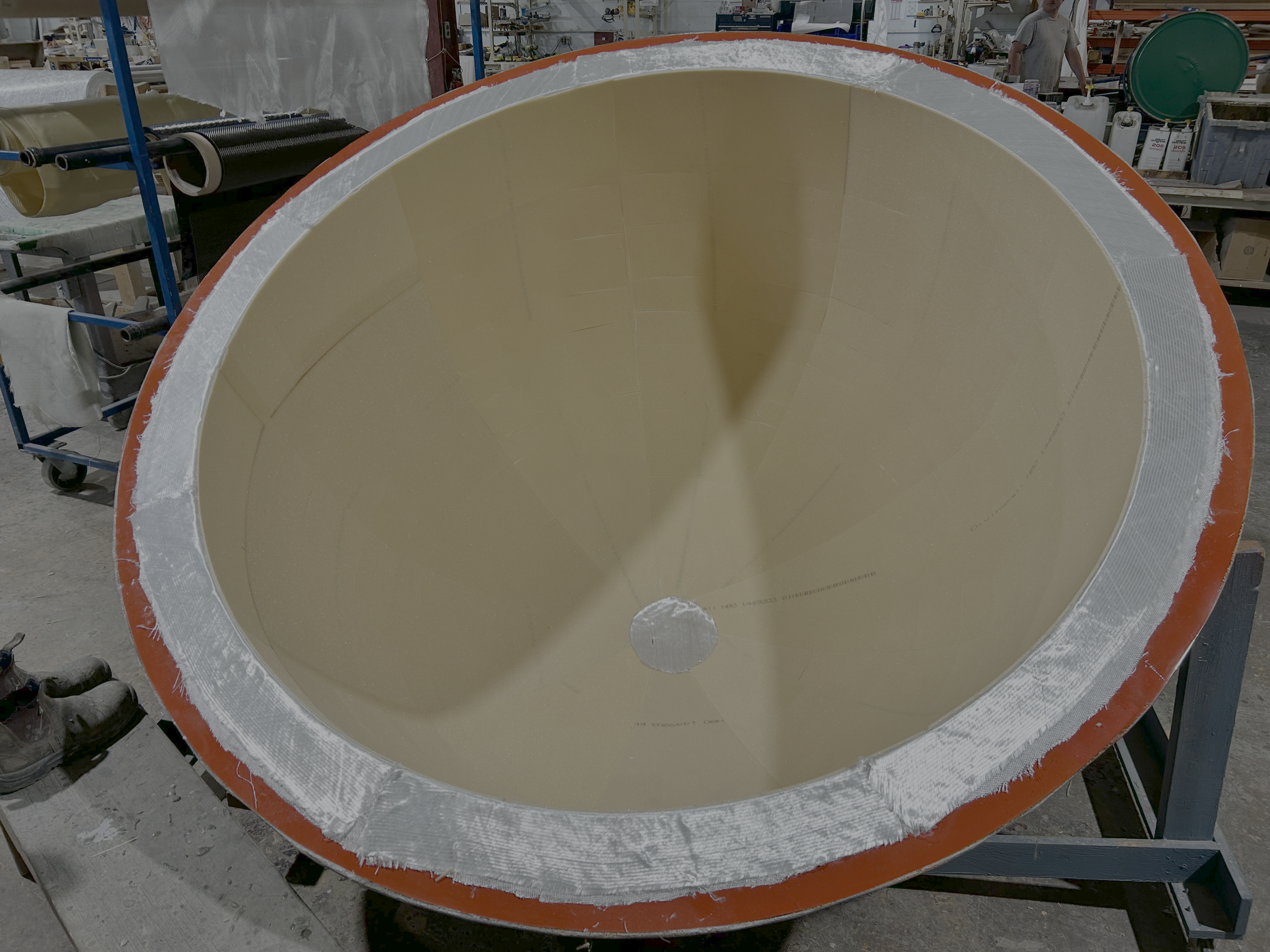
The physics of how radio frequency signals interact with composite materials depends on the frequency band in question. A laminate that is effectively transparent at one frequency can become a source of significant loss or interference at another. This means the laminate schedule has to be designed around the specific antenna it will house and the frequencies that antenna operates on.
This is where off-the-shelf radomes fall short. A standard enclosure might be tested and certified for a given frequency range, but the moment an integrator needs something outside that range — or needs a structure that performs across multiple bands — the catalogue product stops being a solution. The laminate has to be engineered from the requirements, not selected from a shelf.
How CCI approaches it
CCI uses proprietary software to determine the optimal laminate schedule for each radome we design. The inputs are the antenna specifications and the frequency bands it operates across. The output is a wall construction that minimizes insertion loss and reflection at those specific frequencies while meeting the structural demands of the installation environment.
This approach matters most in applications where performance margins are tight. A satellite communications terminal, a counter-drone sensor array, or a defence radar installation all have specific link budgets and system tolerances. A radome that introduces even modest signal degradation can affect the reliability of the whole system. The laminate schedule is where that risk is managed.
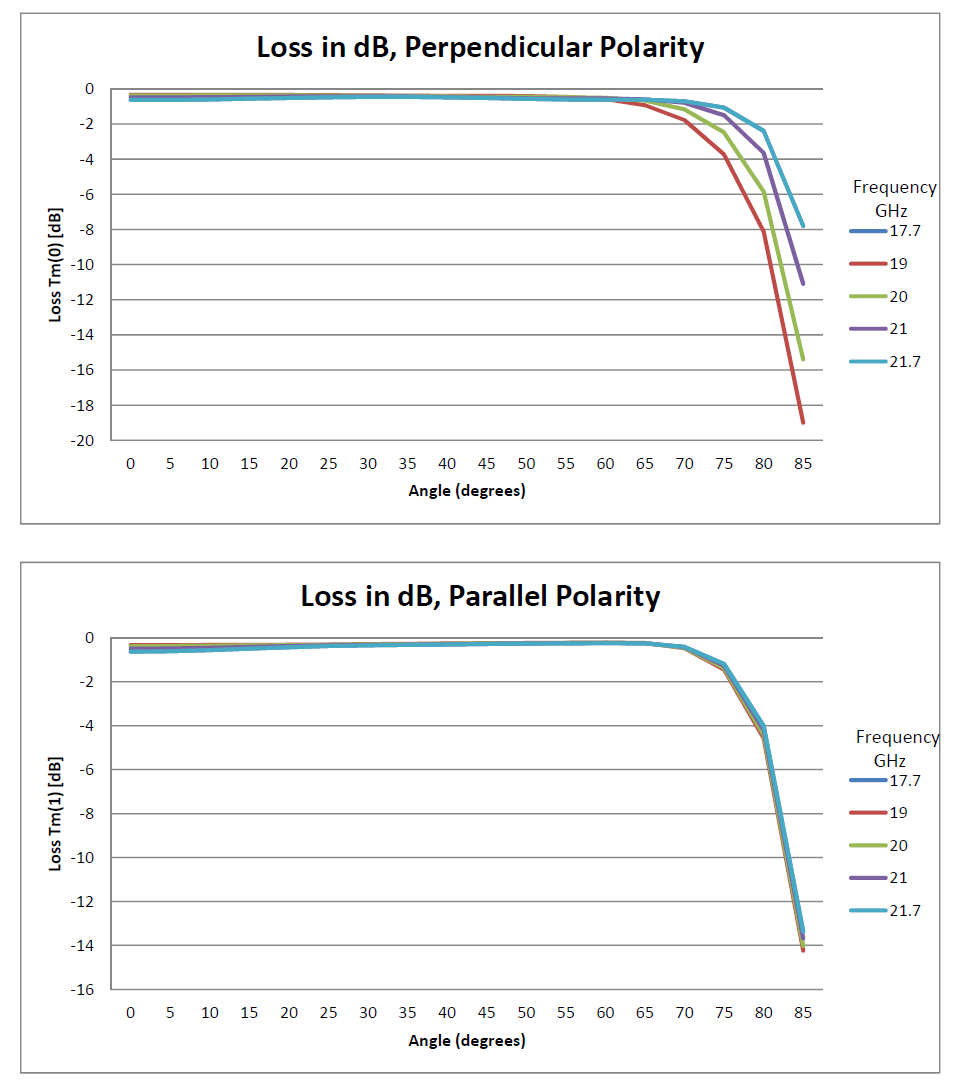
Loss analysis at Ka band (a popular request these days).
Optimized 5-ply radome ("C Sandwich") RF analysis:
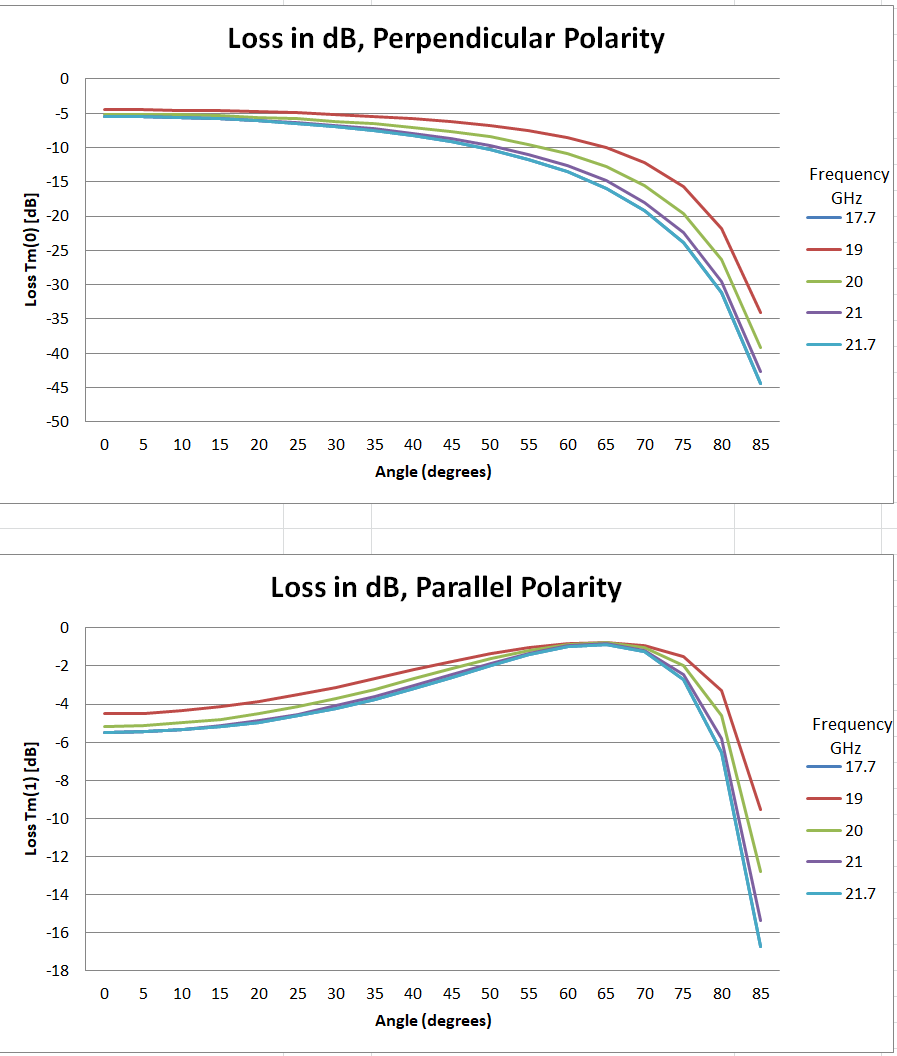
Vs a solid fiberglass skin of equivalent stiffness
What a poorly specified laminate schedule can introduce
Insertion loss — signal attenuation as it passes through the radome wall
Reflection — a portion of the signal bouncing back toward the antenna
Pattern distortion — changes to the antenna’s beam shape or pointing accuracy
Cross-polarization — interference between polarization states in dual-pol systems
Frequency-specific nulls — sharp performance drops at particular operating frequencies
The structural side still matters
RF transparency does not exist in isolation. The laminate also has to carry the structural loads of the installation — wind, ice, seismic loads depending on the site, and the mechanical stresses of installation and maintenance. In some applications, it also has to meet ballistic or overpressure specifications.
Balancing RF performance with structural requirements is where radome engineering gets genuinely complex. Adding material thickness for structural reasons affects RF transparency. Changing the fibre orientation or resin system for strength affects how the wall behaves at frequency. The laminate schedule has to satisfy both sets of requirements simultaneously, and that requires a design process that treats them as linked variables rather than separate problems.
What this means for procurement
For procurement teams and systems integrators, the laminate schedule question is worth raising early. Specifically: has the radome wall been optimized for the antenna and frequencies in this program, or is it a standard construction that has been tested to a general specification?
The answer tells you a lot about the risk profile of the product. A radome with a custom-engineered laminate schedule has been designed to perform in your system. A standard construction has been designed to perform in a range of systems, and yours may or may not fall cleanly within it.
CCI works from the antenna specifications forward. Every radome we produce is designed to the requirements of the program it is built for, including the laminate schedule. If you are working through a requirement and want to understand how we approach the RF performance side of the design, we are happy to talk through it.
Working on a radome requirement?
Talk to our team about how we engineer laminate schedules for specific antennas and frequency bands.
