
Radomes in Counter-Drone and Security Applications
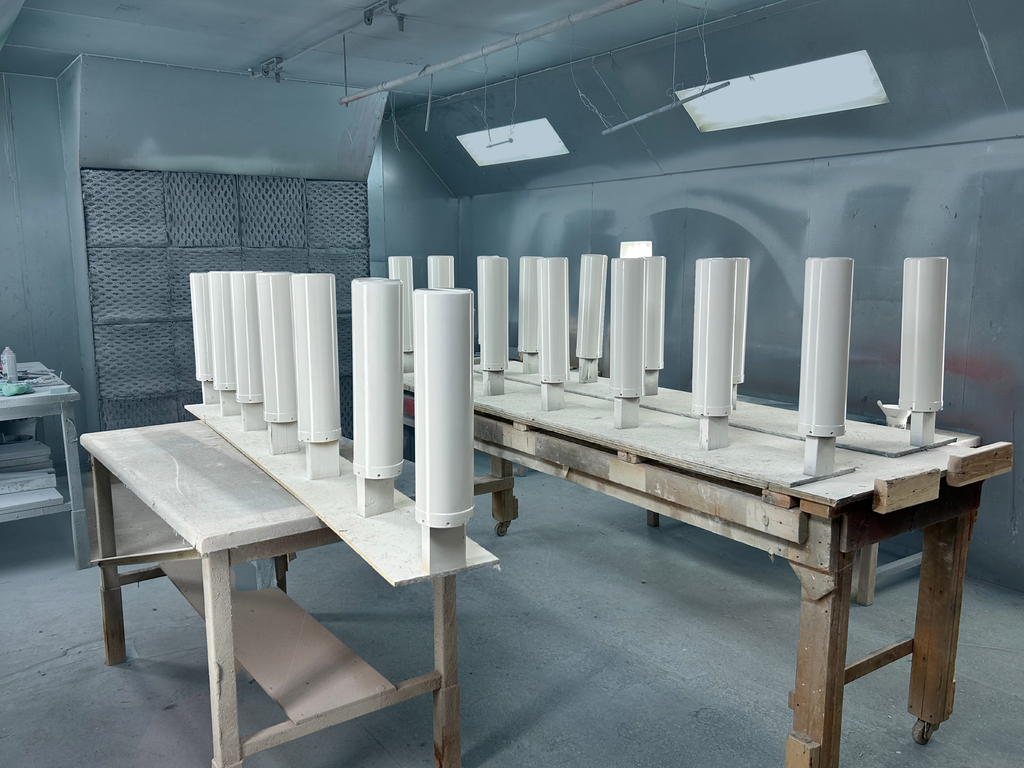
The use of unmanned aerial systems has expanded faster than the regulatory and security frameworks built to manage them. That gap has driven significant investment in counter-drone technology — detection, tracking, and defeat systems — across defence, critical infrastructure, and public security sectors. At the centre of most of those systems is a sensor. And sensors operating in exposed, often austere environments need protection that does not compromise what they are there to do.
That is where radomes come in. In counter-drone and broader security applications, the enclosure is not a passive component. It is an active part of system performance — one that has to be engineered to the specific sensor it houses, the environment it operates in, and the tempo of the program it supports.
What makes C-UAS deployments different
Counter-drone systems are often deployed quickly, in locations that were not originally designed to host them, and under operational timelines that leave little room for iteration. A fixed installation at a military base has a defined site plan, known environmental loads, and a procurement process with time built into it. A rapid-deployment C-UAS capability protecting a temporary site or a critical event has none of those luxuries.
The radome has to account for both scenarios. For fixed installations, the focus is on long-term durability, RF performance across the sensor’s full operating band, and resistance to the environmental conditions of the site. For deployable systems, weight, pack size, ease of installation, and structural robustness during transport become equally important variables.
CCI has supplied radomes in support of counter-drone security programs internationally, including work with an Australian organization focused on C-UAS detection. That program required enclosures engineered to the sensor’s specific frequency requirements, built to perform in outdoor conditions without maintenance intervention across extended deployment periods.
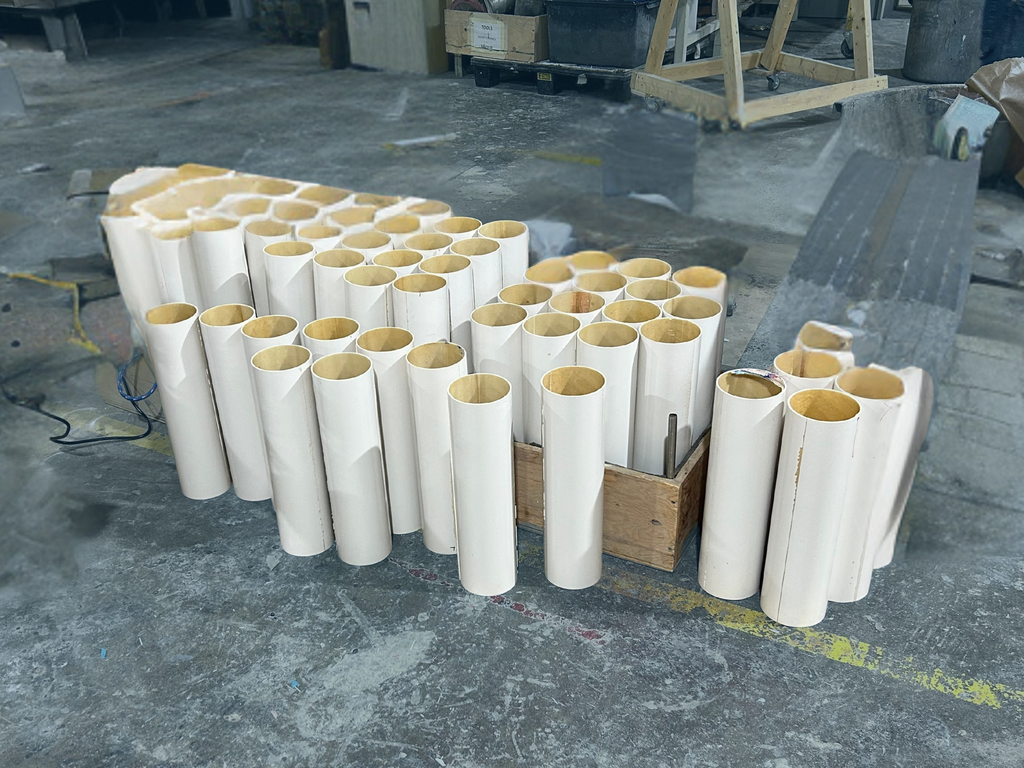
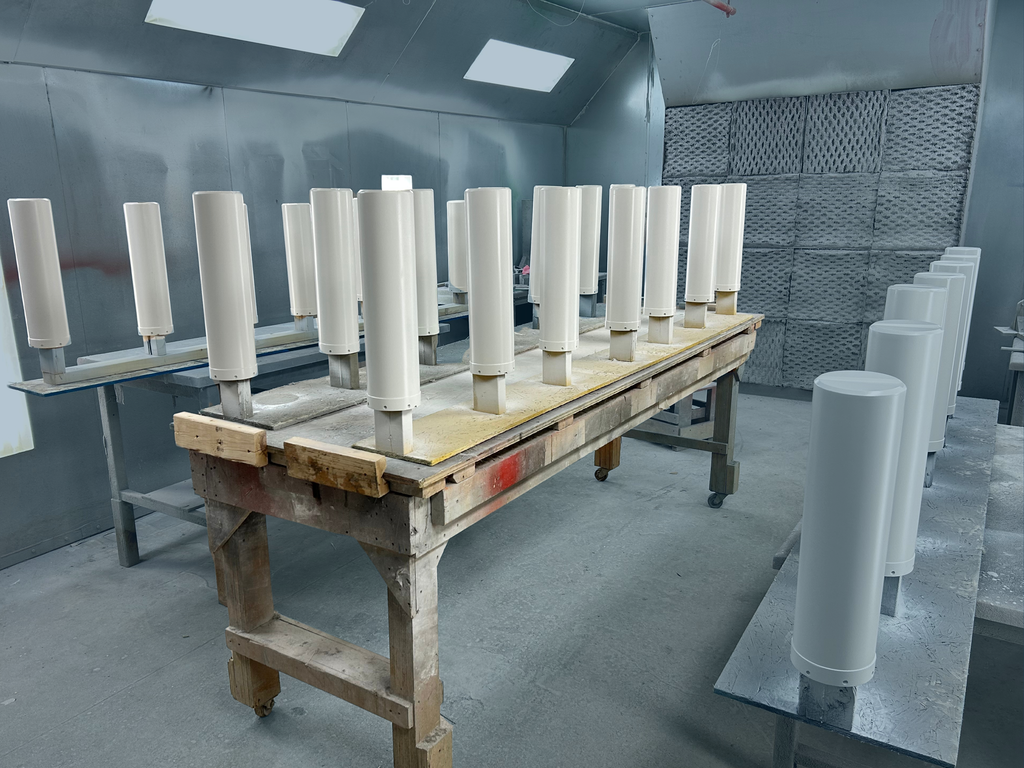
Images of c-uav radomes in production
The sensor protection challenge
Most counter-drone sensors operate across multiple frequency bands simultaneously. A system detecting RF emissions from a UAS, tracking it with radar, and optionally using electro-optical or infrared sensors may have several antennas operating at very different frequencies within a single housing or across a sensor suite. The radome — or radomes — protecting that suite have to maintain RF transparency across all of them.
Radome requirements common to C-UAS and security sensor programs
Multi-band RF transparency across the sensor’s full operating frequency range
Structural performance under wind loading at exposed or elevated installation sites
Resistance to environmental degradation across extended unattended deployment periods
Low radar cross-section where the enclosure itself must not create a detectable signature
Compatibility with rapid deployment and recovery procedures for mobile configurations
Compliance with applicable defence and security procurement standards
The low radar cross-section requirement is worth noting specifically. In some security applications, the radome itself must not be detectable by the systems it is supporting or by adversary sensors. That adds a design constraint that does not exist in most commercial radome applications and requires careful attention to material selection and geometry.
How the broader defence investment connects
NATO member states have committed to significant increases in defence spending over the coming years, and counter-drone capability is consistently identified as a priority area. Canada is no exception. The combination of domestic procurement pressure, allied interoperability requirements, and a genuine operational need for deployable C-UAS solutions has created real demand for Canadian-sourced components and systems.
For defence primes and systems integrators building C-UAS capabilities, the supply chain question matters. US manufacturers are operating under significant pressure across multiple concurrent programs, and lead times for specialized composite structures have extended accordingly. Canadian suppliers with demonstrated experience in defence-grade radome manufacturing are in a position to provide both the product and the supply chain reliability that programs need.
CCI’s approach to security and defence programs
CCI brings composite engineering experience developed across decades of defence and commercial manufacturing to every security-sector radome program we support. Our design process starts with the sensor specifications — frequency bands, beam geometry, pointing requirements — and works from there to a laminate schedule and structural design that meets the performance requirements of the program.
We work across fixed and deployable configurations, and we have experience with the procurement and documentation requirements of defence and government programs in Canada and internationally. If you are working on a C-UAS or security sensor program and want to talk through the radome requirements, we are set up to have that conversation at any stage of the design process.
Next month we’ll be looking at radomes in satellite communications — a different set of performance requirements, but the same core engineering discipline.
